What does it mean to train AI?

Context
Training is at the heart of Artificial Intelligence: it is the process by which models learn from data and improve their predictive capabilities. In this article, we explore the steps, techniques, and best practices for effective AI training, ensuring reliable and high-performance results.
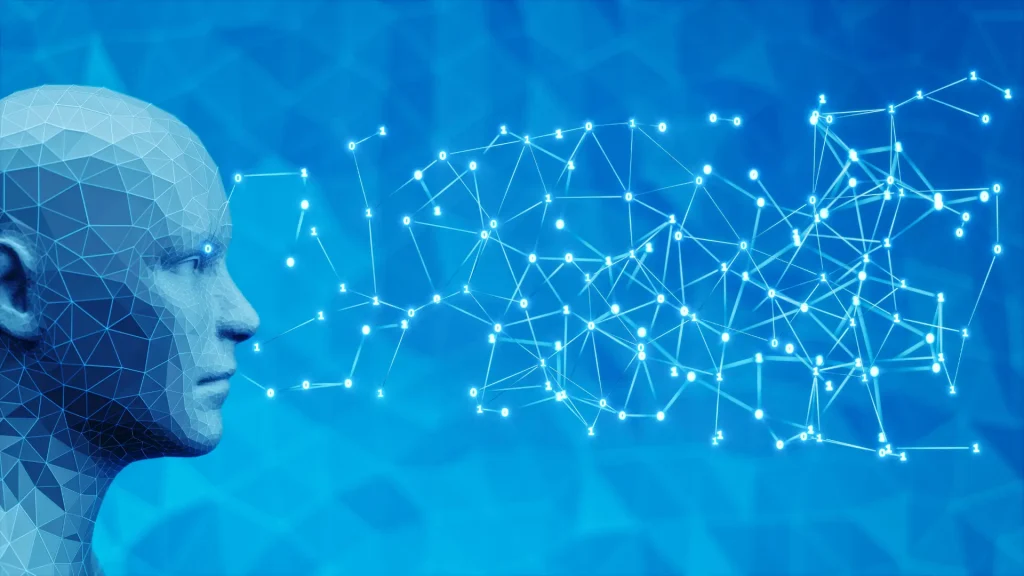
What is Artificial Intelligence training?
Training consists of using datasets to “teach” the model how to interpret, classify, or predict information. This process relies on machine learning and deep learning algorithms that learn from the correlations in the data, adapting their parameters in a way that minimizes error and maximizes accuracy.
Main Stages of Training
Data collection and preparation
- Collection: The first step is to obtain high-quality data that is relevant to the problem being solved.
- Cleaning and Preprocessing: Data is filtered and normalized to eliminate noise and inconsistencies, ensuring that the model can learn effectively.
Training and optimization
- Training: During this phase, the model is fed with data and its parameters are updated based on the error made in the predictions.
- Hyperparameter Tuning: A crucial step in which you adjust key variables, such as the learning rate, to optimize the performance of the model.
Validation and testing
- Cross-Validation: Cross-validation techniques are used to verify the model’s ability to generalize to unseen data.
- Test and Evaluation: The model is tested on a separate dataset to measure its accuracy, precision, and robustness.
Training techniques and methodologies
Supervised learning
The model is trained on labeled data, learning how to map specific inputs to desired outputs.
Unsupervised learning
Used to discover hidden patterns and structures in data, without the use of predefined labels.
Reinforced learning
The model learns by making sequential decisions and obtaining feedback through rewards, optimizing a policy of action.
Hybrid approach to training
When it comes to training advanced artificial intelligences such as Large Language Models (LLMs), it is important to understand that a single learning paradigm is rarely used in isolation. Often, the key to achieving high-performance and versatile models lies in a hybrid approach, which combines the strengths of different techniques.
Let’s take Gemini, the model developed by Google, as a concrete example. Its impressive ability to understand and generate text, images, audio, video and code is not the result of a single type of training, but of a skilful orchestration of different methodologies
Applications of Artificial Intelligence
In business and marketing
AI optimizes decision-making processes, personalizes the customer experience, and improves operational efficiency, turning raw data into winning strategies.
In technology and communication
From automating systems to managing social media interactions, AI enables in-depth analysis and personalized user interaction.
Best practices in AI training
Data Quality:
Investing in the collection of accurate and representative data is critical to effective training.
Continuous Monitoring:
Continuously evaluate model performance to identify overfitting or underfitting issues and make adjustments as needed.
Security and Privacy:
Protect sensitive data using anonymization techniques and ensuring compliance with privacy regulations throughout the training process.
Iteration and Update:
Training is not a static process – it is important to review and update models regularly to adapt to market changes and new information.

Conclusions
AI training is a complex and dynamic process that requires careful planning and continuous optimization. Investing in robust training techniques and adopting appropriate best practices ensures that you create reliable AI models that can provide valuable insights and revolutionize the way businesses operate. With an unwavering focus on data quality and security, AI becomes a powerful tool to drive innovation and success in the digital world.